
Getting a stubborn wood fire going with just kindling and a match can take a frustrating amount of patience on a cold night.
A gas log lighter solves that: it’s a permanently installed gas pipe with a valve, tucked under your firewood, that you light briefly to get the wood itself burning reliably before shutting the gas back off.
It’s not the same thing as a gas fireplace insert — it’s a starting aid for a genuine wood-burning fireplace. Below: five current options, a comparison, and what actually matters when choosing one.
- Runs on propane: the Midwest Hearth propane gas log lighter is built specifically for a propane gas line.
- Runs on natural gas: the Midwest Hearth natural gas log lighter is the same design built for natural gas instead.
- Want everything included: the Dante Products universal combo kit bundles the valve, key, and floor plate together.
- Heaviest-duty construction: the Midwest Hearth cast iron log lighter kit is built from cast iron for years of hard use.
The 5 Best Log Lighters Right Now

- UNIVERSAL FIT – STRAIGHT OR ANGLED INSTALLATION: Converts easily between straight and 90-degree angled configurations using the included mixer plug, making this log lighter compatible with virtually any wood-burning fireplace setup.
- UNIVERSAL FIT – STRAIGHT OR ANGLED INSTALLATION: Converts easily between straight and 90-degree angled configurations using the included mixer plug, making this log lighter compatible with virtually any wood-burning fireplace setup.

- 【Universal Versatile Installation】Designed for seamless adaptability, simply set up the logs over the log lighter, rotate the key to turn on the gas and the fire will quickly light up. No need to worry about compatibility—its flexible design ensures quick setup for a cozy, glowing fire, perfect for dual fire conversion or standard log lighter setups

- 【Universal log lighter】Can be easily converted for either a straight or 90-degree angled installation.

- Gas Fireplace Logs-fireplace Lighter Universal and Versatile Installation: The universal natural gas log lighter starter is designed for easy adaptability—use it for either a straight or 90-degree angled installation. This flexibility makes it perfect for a variety of fireplace setups, ensuring a quick and seamless start to your wood-burning fire. Gas fireplace embers bring warmth and a cozy glow, bringing your gas fireplace to life and creating the warm, inviting ambiance you love.
Log Lighter Comparison
| Log Lighter | Gas Type | Material | Best For |
|---|---|---|---|
| Midwest Hearth Propane | Propane | Steel | Propane gas lines |
| Midwest Hearth Natural Gas | Natural gas | Steel | Natural gas lines |
| Dante Products Combo Kit | Natural gas | Stainless steel / brass | All-in-one kit |
| Stanbroil Universal Starter | Natural gas | Steel | Vent-free appliance versatility |
| Midwest Hearth Cast Iron Kit | Propane | Cast iron | Heaviest-duty construction |
1. Midwest Hearth Propane Gas Log Lighter
Best for: propane gas linesA heavy-duty steel pipe with an adjustable regulator, so you can dial in exactly how much flame you need to get logs going without overdoing it. Built specifically for a propane supply — double-check your home’s gas type before ordering, since propane and natural gas log lighters aren’t interchangeable.
- Adjustable regulator controls flame output
- Heavy-duty steel construction
- Only compatible with a propane supply, not natural gas
2. Midwest Hearth Natural Gas Log Lighter
Best for: natural gas linesThe same reliable design as pick #1, built for a natural gas line instead of propane. If your home already runs natural gas to other appliances, this is the version you want — check your gas type before ordering either one.
- Adjustable regulator controls flame output
- Heavy-duty steel construction
- Only compatible with natural gas, not propane
3. Dante Products Universal Log Lighter Combo Kit
Best for: an all-in-one kit
Comes with the burner pipe, a quarter-turn ball valve, a chrome key, and a floor plate — everything needed for a complete installation without separately sourcing hardware. Stainless steel and brass construction is built to hold up over years of use.
- Complete kit — nothing extra to source separately
- Stainless steel and brass construction
- More parts to install correctly than a simple single-pipe unit
4. Stanbroil Universal Gas Log Lighter Starter
Best for: vent-free appliance versatilityRated for use across vent-free fireplaces, stoves, grills, and furnaces rather than just a single-purpose fireplace log lighter — a reasonable pick if you might want the same style of starter on more than one appliance around the property.
- Works across multiple vent-free gas appliances
- Includes air-intake mixer and temperature regulator
- Natural gas only — check compatibility before buying
5. Midwest Hearth Universal Cast Iron Log Lighter Kit
Best for: heaviest-duty construction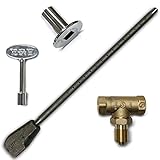
Cast iron construction with a weatherproof finish holds up to years of heavy use better than lighter steel alternatives, and works either indoors or outdoors. Includes the burner pipe, ball valve, chrome key, and floor plate needed for installation.
- Cast iron construction outlasts lighter alternatives
- Weatherproof finish works indoors or outdoors
- More parts to assemble than a simple single-pipe unit
Video: How to Install a Log Lighter
Log Lighter Buying Guide
Gas type — the first decision
Propane and natural gas log lighters are not interchangeable — the burner orifice and regulator are sized differently for each fuel. Confirm which gas type actually runs to your fireplace before buying, since this rules out half the market immediately.
Kit completeness
Some log lighters are just the burner pipe itself, assuming you already have a compatible valve and key. Others, like picks #3 and #5 above, bundle the ball valve, key, and floor plate together — worth it if you’re starting from scratch and don’t want to source hardware separately.
Material
Steel is the standard and holds up well to regular use. Cast iron, like pick #5, is heavier-duty still and a reasonable upgrade if the log lighter will see frequent, heavy use over many winters. Stainless steel and brass components resist corrosion best in kits that will see outdoor exposure.
Installation location
Most log lighters install under where you’ll stack your firewood, connected to a gas shutoff valve you can access easily — typically a floor-mounted key just outside the firebox. If you’re not comfortable working with gas lines, this is a reasonable job to leave to a licensed professional rather than a full DIY project.
Safety features
A dedicated shutoff valve is essential — you use the log lighter only briefly to get wood burning, then shut the gas off completely once the fire has caught, unlike a full gas fireplace insert that runs continuously. Look for a design with a clearly marked, easy-to-turn valve key you can operate quickly if needed.
Local code and permitting
Gas line work is regulated in most areas, and adding a log lighter to an existing fireplace may require a permit or inspection depending on your municipality. It’s worth a quick call to your local building department before installation, even if you’re hiring a licensed plumber or gas fitter to do the actual work.
How to Use a Log Lighter
Stack your firewood over the log lighter pipe the way you normally would, then open the gas valve and light the escaping gas with a long match or lighter. Once the wood has genuinely caught and is burning on its own — not just charring — shut the gas valve off completely. The log lighter’s only job is to get the wood started; running gas continuously alongside a wood fire isn’t how these are designed to be used.
FAQ
The Bottom Line
Confirm your gas type first — that alone cuts the decision in half. From there, choose a complete kit if you’re starting from scratch, or a bare burner pipe if you already have compatible valve hardware in place.
Product availability and pricing on Amazon shift constantly, so the picks above reflect what’s actually in stock right now, and the live listings throughout this page will update themselves if that changes.

Hi, my name’s Eugene Duke and I love sitting by my fireplace reading a book and sipping on an adult beverage. Do you have a fireplace in your house? I’ll help you figure out the best type and style of fireplace for your home.