
A pellet stove trades the romance of splitting and stacking cordwood for something closer to appliance-level convenience — pour in pellets, set a thermostat, and let it run.
That convenience comes with real trade-offs: it needs electricity to run (with one notable exception below), and it’s a mechanically busier appliance than a simple wood stove.
Below: five current pellet stoves, a comparison, and everything worth knowing before picking one.
- Best overall: the Castle Serenity Pellet Stove pairs smart-controller convenience with a compact footprint.
- Best for large-space coverage: the ComfortBilt HP22 Pellet Stove is EPA-certified and rated for up to 2,800 square feet.
- Best for less frequent refilling: the PelPro PP150 Pellet Stove has a 150-pound hopper.
- Best if the power goes out: the US Stove GW1949 Wiseway non-electric pellet stove runs with zero electricity.
The 5 Best Pellet Stoves Right Now

- FREIGHT SHIPPING: THIS ITEM SHIPS VIA LTL FREIGHT CARRIER VALID PHONE NUMBER OR EMAIL ADDRESS IS REQUIRED FOR DELIVERY

- Built-in WiFi – Smart Home Technology


- Heats up to 2,800 sq. ft. under mild temperature conditions

- Easy to Clean - There are no tubes, corrugations, or hidden chambers

- Built-in WiFi – Smart Home Technology
Pellet Stove Comparison
| Stove | Coverage | Hopper | Best For |
|---|---|---|---|
| Castle Serenity | 1,500 sq ft | 40 lb | Overall / compact smart control |
| ComfortBilt HP22 | 2,800 sq ft | 55 lb | Large-space coverage |
| PelPro PP150 | 2,500 sq ft | 150 lb | Less frequent refilling |
| US Stove GW1949 Wiseway | ~2,000 sq ft | 60 lb | No electricity required |
| ComfortBilt HP22i | 2,800 sq ft | 47 lb | Converting an existing fireplace |
1. Castle Serenity Pellet Stove
Best for: overall useA smart controller with weekly thermostat scheduling and an eco operating mode makes this one of the more hands-off stoves on this list, and the compact footprint fits smaller rooms without sacrificing real heating capacity. Read more about how pellet stove thermostats actually work.
- Smart controller with weekly scheduling
- Compact footprint for smaller rooms
- 40-pound hopper means more frequent refilling than the larger units below
2. ComfortBilt HP22 Pellet Stove
Best for: large-space coverageEPA-certified and rated for up to 2,800 square feet, with a large viewing window that shows off the flame better than most stoves at this price point. A 55-pound hopper keeps the refill interval reasonable even at higher heat settings.
- EPA-certified, rated up to 2,800 sq ft
- Large viewing window
- Larger footprint than the compact picks on this list
3. PelPro PP150 Pellet Stove
Best for: less frequent refilling
A 150-pound hopper is genuinely large for this category, cutting down how often you’re hauling a pellet bag over to refill it during heavy winter use. Auto-ignition and a built-in thermostat round out a stove built around low daily maintenance.
- 150-pound hopper, far less frequent refilling
- Auto-ignition with built-in thermostat
- Larger hopper means a bigger overall unit to find floor space for
4. US Stove GW1949 Wiseway Non-Electric Pellet Stove
Best for: no electricity required
Every other stove on this list needs electricity to run — this is the exception, using gravity feed and natural draft instead of powered augers and blower fans. Worth serious consideration if you want backup heat that still works during a power outage.
- Runs with zero electricity — works during outages
- Fewer motorized parts to maintain
- No smart controls or auto-ignition, by design
5. ComfortBilt HP22i Pellet Stove Fireplace Insert
Best for: converting an existing fireplace
An insert version of pick #2, built to slide into an existing masonry fireplace opening rather than stand freestanding on the floor — the practical choice if you already have a wood-burning fireplace or stove you’d rather convert than replace outright.
- Fits into an existing fireplace opening
- Same 2,800 sq ft coverage as the freestanding HP22
- Needs your existing fireplace opening sized and measured correctly before ordering
Video: How a Pellet Stove Works
What Is a Pellet Stove?
A pellet stove is a type of wood-burning stove that burns compressed wood pellets instead of split logs. It delivers a steady, low-maintenance flame and is used in everything from small apartments to large homes and even industrial spaces, largely because it’s a genuinely easy and affordable way to add indoor heat.
Advantages
- Cost-effective as a supplementary heat source, since pellet prices stay fairly stable.
- Easy to use and maintain — most modern stoves use electronic or remote control and produce no visible smoke indoors.
- High burn and thermal efficiency, often above 90% compared to a standard wood-burning stove.
- Long burn times — a full hopper can keep a stove running for a day or more depending on settings.
- No chimney required, since forced ventilation handles exhaust — see our guide on pellet stoves and chimneys.
- Clean-burning and generally made from recycled wood material, and considered roughly carbon-neutral over the pellet’s full lifecycle.
- Simpler installation than a traditional wood stove, since it needs no dedicated chimney or vents for the combustion chamber itself.
Disadvantages
- Generally a less traditional-looking design than a classic wood-burning stove.
- Needs regular weekly cleaning of components like the heat exchanger, plus annual professional service.
- Pellet bags are heavy and need dedicated dry storage space — a full hopper can take several bags to fill.
- Motorized parts (augers, blower fans) create more running noise than a simple wood stove, though newer models are quieter.
- Needs electricity to run, with rare non-electric exceptions like pick #4 above.
- Flames are typically smaller and less dramatic than an open wood fire.
- Upfront cost can be significant for a higher-capacity, feature-rich model.
What to Look For
Heating capacity (BTU)
Heating capacity ranges widely, from about 8,000 to 90,000 BTU per hour, with most common stoves falling between 40,000 and 60,000 BTU.
Hopper size
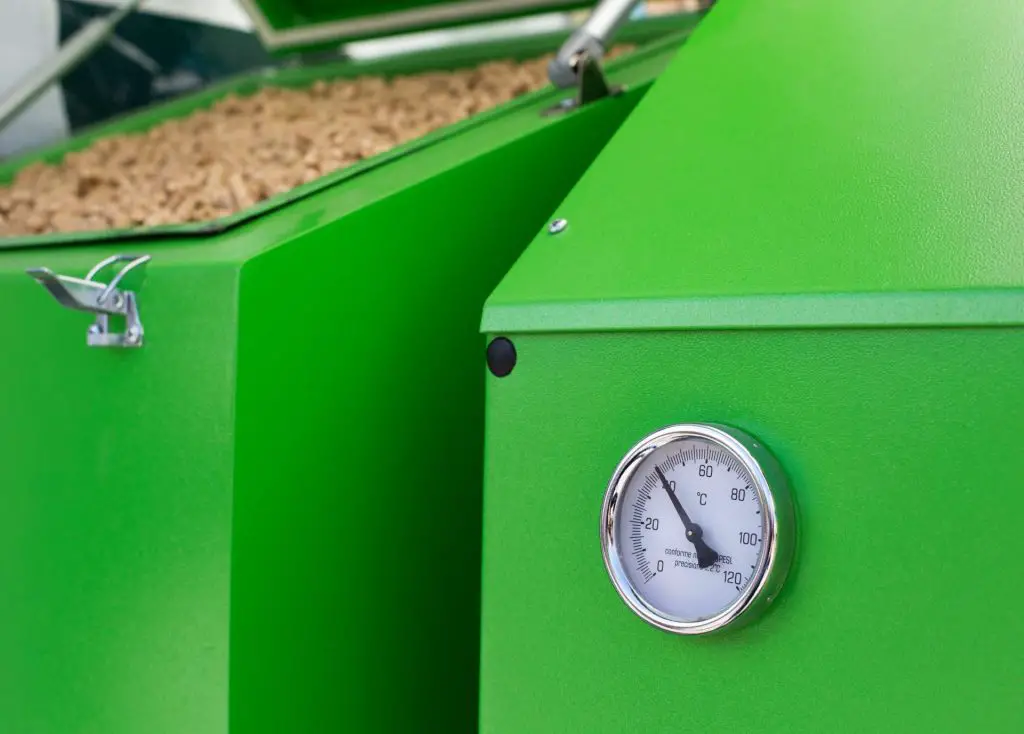
The hopper is where you load pellets, typically located at the top or bottom of the stove. Capacity ranges from about 35 to 150 pounds, with 55 pounds being a common middle ground — a bigger hopper means fewer refills during heavy use.
Energy efficiency
EPA-certified stoves typically fall in the 70–83% efficiency range, well above a typical open wood fire.
Reliability
Pay attention to the build quality of the combustion chamber, exhaust system, and ignition mechanism — these are the components most likely to need service over the stove’s life.
Other Considerations

Sizing for your space
Match the stove’s rated coverage to your actual room or home size rather than buying the biggest unit available — an oversized stove for a small space wastes fuel and makes fine temperature control harder. If it’s a primary heat source rather than a supplement, size up; if it’s backup heat alongside a wood stove or furnace, a smaller unit is usually fine.
DIY or hire a pro?
A freestanding pellet stove needs no dedicated blower fan or chimney the way a traditional stove does, which makes DIY installation realistic for some freestanding models if you’re reasonably handy. An insert model (like pick #5) generally benefits from professional installation to confirm it’s sized and vented correctly for your existing fireplace opening.
Ceiling height
Most manufacturers specify a minimum clearance above the stove, often around 12 inches, for safety. Confirm your ceiling height against the specific model’s requirements before buying, especially for a taller freestanding unit.
Types of Pellet Stoves
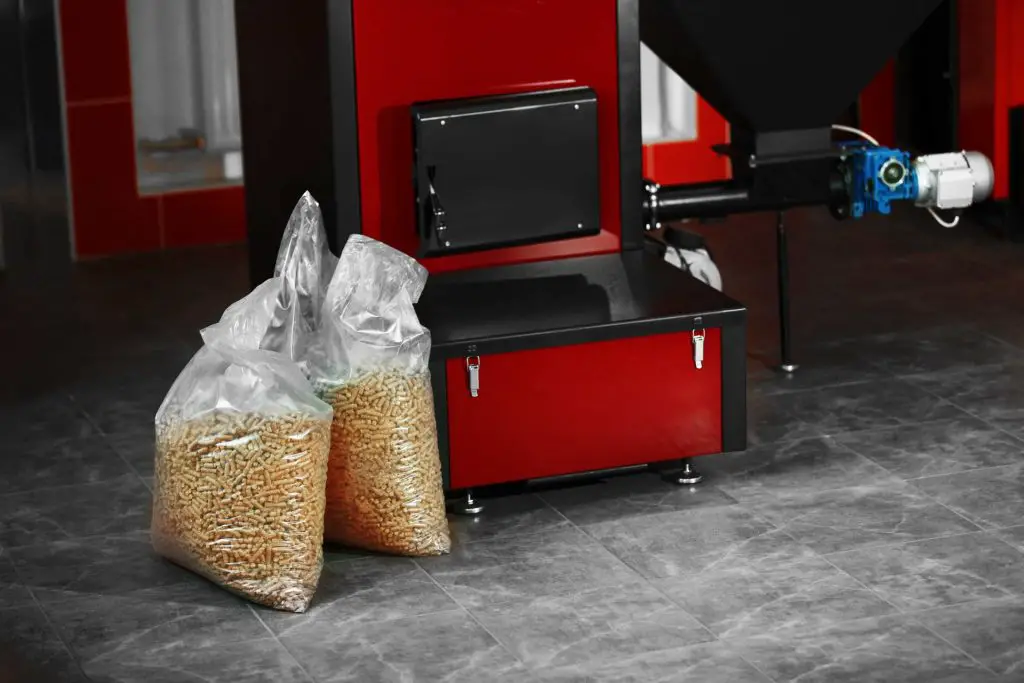
It’s a distinct category among the broader types of fireplaces, with its own set of design variations worth understanding before you buy.
By ignition
Auto-ignition stoves light with the push of a button and need minimal hands-on operation, but stop working during a power outage since they depend on electricity throughout. Manual-ignition stoves are typically cheaper, need matches or ignition gel to start, and generally require less ongoing maintenance of the ignition components themselves.
Freestanding vs. inserts
Freestanding stoves can be placed almost anywhere with appropriate floor protection and come in a wide range of sizes, finishes, and colors. Pellet stove inserts, like pick #5 above, convert an existing wood-burning fireplace into a pellet-burning one — see our dedicated roundup of pellet stove inserts if that’s specifically what you’re after.
Top-feed vs. bottom-feed
Top-feed stoves drop pellets from a hopper at the top down into the fire, which helps keep the hopper itself from overheating but can occasionally let ash block the feed tube. Bottom-feed stoves deliver pellets horizontally, which helps keep ash clear of the burn area but tends to run slightly less efficiently overall.
FAQ
The Bottom Line
Match the hopper size and BTU rating to how you’ll actually use the stove — a primary heat source needs more of both than a supplemental one. If losing power during a storm is a real concern in your area, the non-electric option above is worth serious thought over the smart-controlled ones.
Product availability and pricing on Amazon shift constantly, so the picks above reflect what’s actually in stock right now, and the live listings throughout this page will update themselves if that changes.

Hi, my name’s Eugene Duke and I love sitting by my fireplace reading a book and sipping on an adult beverage. Do you have a fireplace in your house? I’ll help you figure out the best type and style of fireplace for your home.