
- Look for the manufacturer’s name embossed on the stove itself, often on the door — Charter Oak, Glenwood, Queen Atlantic, Walker and Pratt, Barstow, and Acme are among the well-known old stove brands.
- Look for a patent number, often near a “PAT.” marking — you can look up any U.S. patent issued after 1790 directly through the USPTO’s patent search.
- Cast iron construction, wood-and-metal combination parts, sculpted (not bolted) legs, and a manufacturer’s mark are the strongest general signs of an authentic antique stove.
- Antique stoves have sold anywhere from a few hundred to over a thousand dollars at auction, though value depends heavily on condition, rarity, and manufacturer — RareAntiqueStoves and 1stDibs are worth browsing to get a feel for current asking prices.
Identifying the Age of Your Vintage Stove
Whether you inherited a stove, spotted one at an estate sale, or picked one up secondhand, figuring out what you actually have takes a mix of recognizing the general style and checking a handful of physical details.
Common Antique Wood Stove Types
Franklin stoves
Developed in the 1700s, the Franklin stove works like an open fireplace insert with hinged doors for loading firewood. Original units aren’t commonly used for heating today, mainly for safety and efficiency reasons compared to modern stoves.
Wood cook stoves
These combined a firebox with cooking burners on top, typically finished in enameled cast iron — a genuine kitchen appliance as much as a heat source.
Cast iron wood-burning stoves
The general workhorse category: a cast iron firebox with a flue pipe extending from the back or top and a front-loading door.
Soapstone wood stoves
These use soapstone rather than metal for the body. Soapstone absorbs and radiates heat differently than cast iron — our soapstone stove guide covers that in more depth.
Ceramic wood stoves
Popular in the 1800s, these incorporated ceramic tile into the stove’s body, which continued radiating stored heat for a while after the fire itself died down.
Pot-bellied stoves
Recognizable by their round, bulging cast iron body and a pipe extending from the top — a genuinely iconic antique stove silhouette.
Parlor stoves
Ornate, often Victorian-era stoves built for heating one or two rooms rather than a whole house, prized as much for decorative appeal as function.
Isinglass stoves
These used compressed mica (isinglass) as a viewing window so you could watch the fire directly. Isinglass tends to flake and discolor with age, which is itself a useful dating clue.
What Counts as an “Antique” Stove?
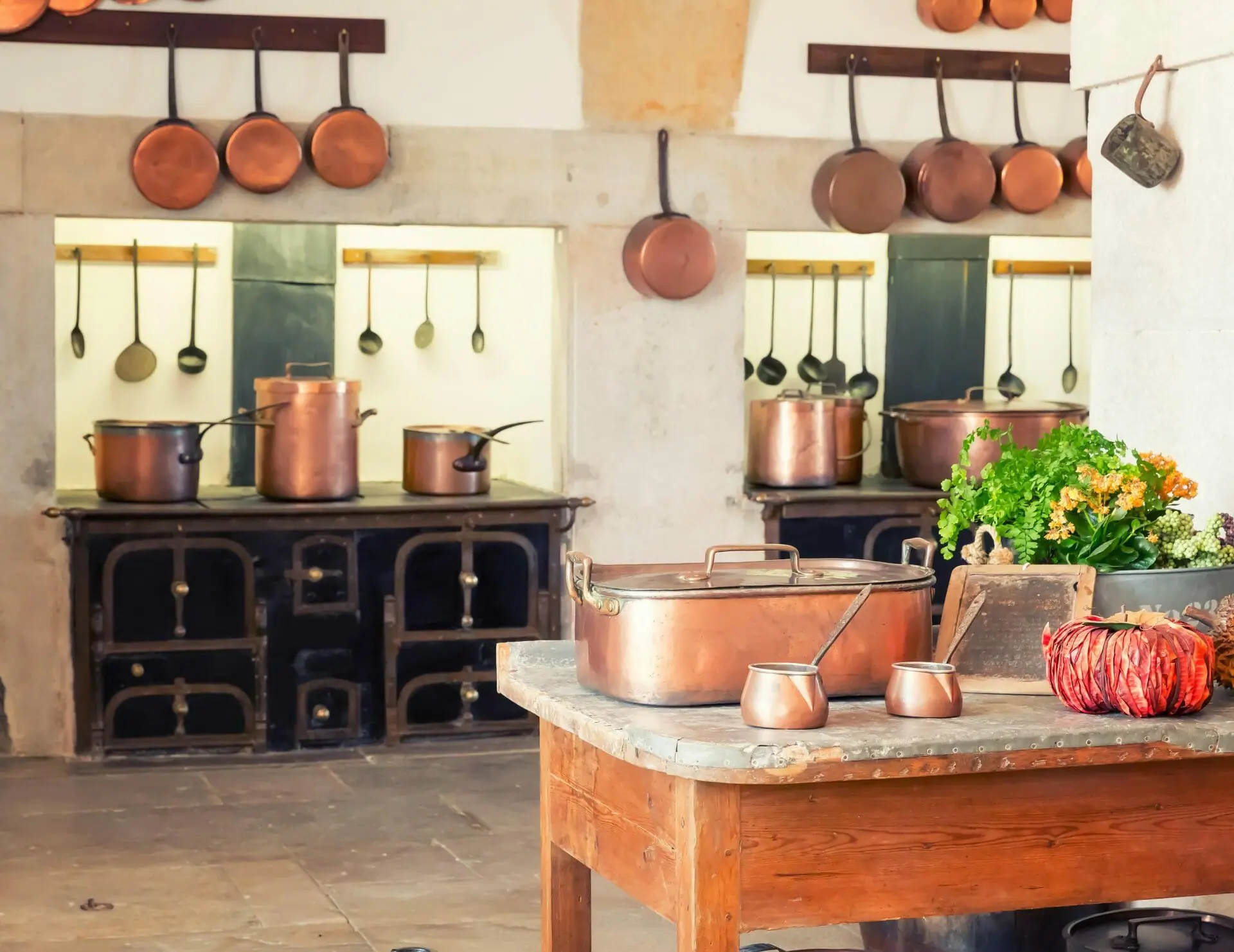
Generally, a cast iron stove made before roughly 1940 qualifies as an antique — stoves from this era served as the primary heat source for most homes before fuel oil and other heating became widely accessible, and plenty are still around today, whether in active use, in storage, or sold as collectibles.
How to Identify an Antique Wood Stove
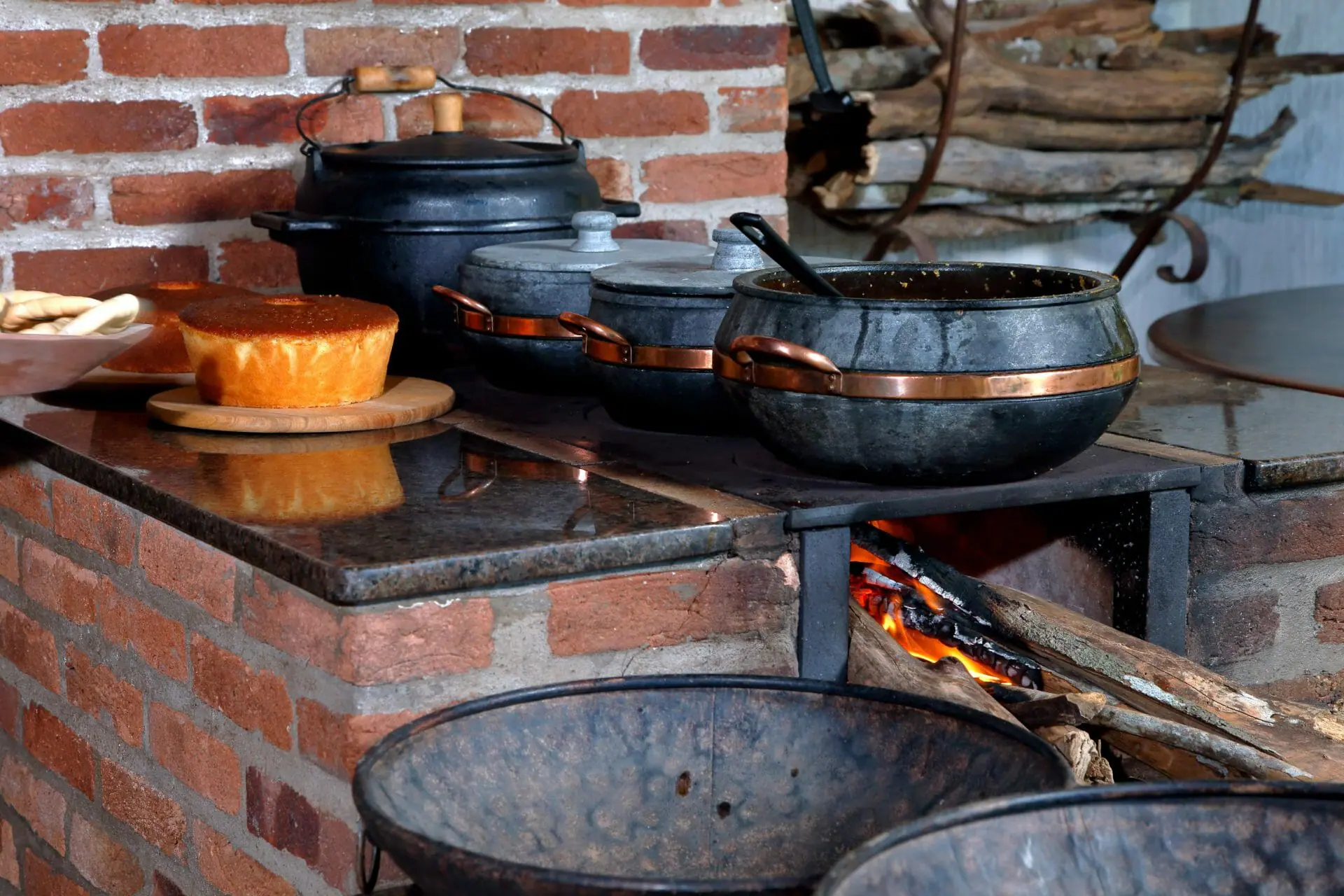
No single detail proves a stove is genuinely antique — look at these together, since a reproduction can get a few of these right without being the real thing.
1. Cast iron body
Cast iron doesn’t rust the way sheet steel does, and it holds up to decades of heat cycling. Bare cast iron showing through worn paint is a good sign you’re looking at an old stove rather than a modern reproduction.
2. “Made in…” markings
If a stove is explicitly marked “Made in USA” (or another country) with crisp, unworn paint, that marking style and condition usually points to a newer piece — genuinely old stoves typically don’t carry this kind of fresh, legible country-of-origin stamp.
3. Stovepipe adapter
A tapered metal adapter fitted to the flue outlet suggests the stove (or its piping) was retrofitted to connect to different, likely newer, piping — worth noting as a sign of the stove’s history, even if not definitive proof of age on its own.
4. Draft door
A small round door that opens to control airflow into the firebox is a classic antique-stove feature. Surface rust on this door isn’t a reliable age signal by itself, but the design itself is characteristic of older stoves.
5. Door hardware
Older stoves often mix wood door handles with metal latches and hinges — a combination modern all-metal stoves generally don’t use.
6. Flue pipes
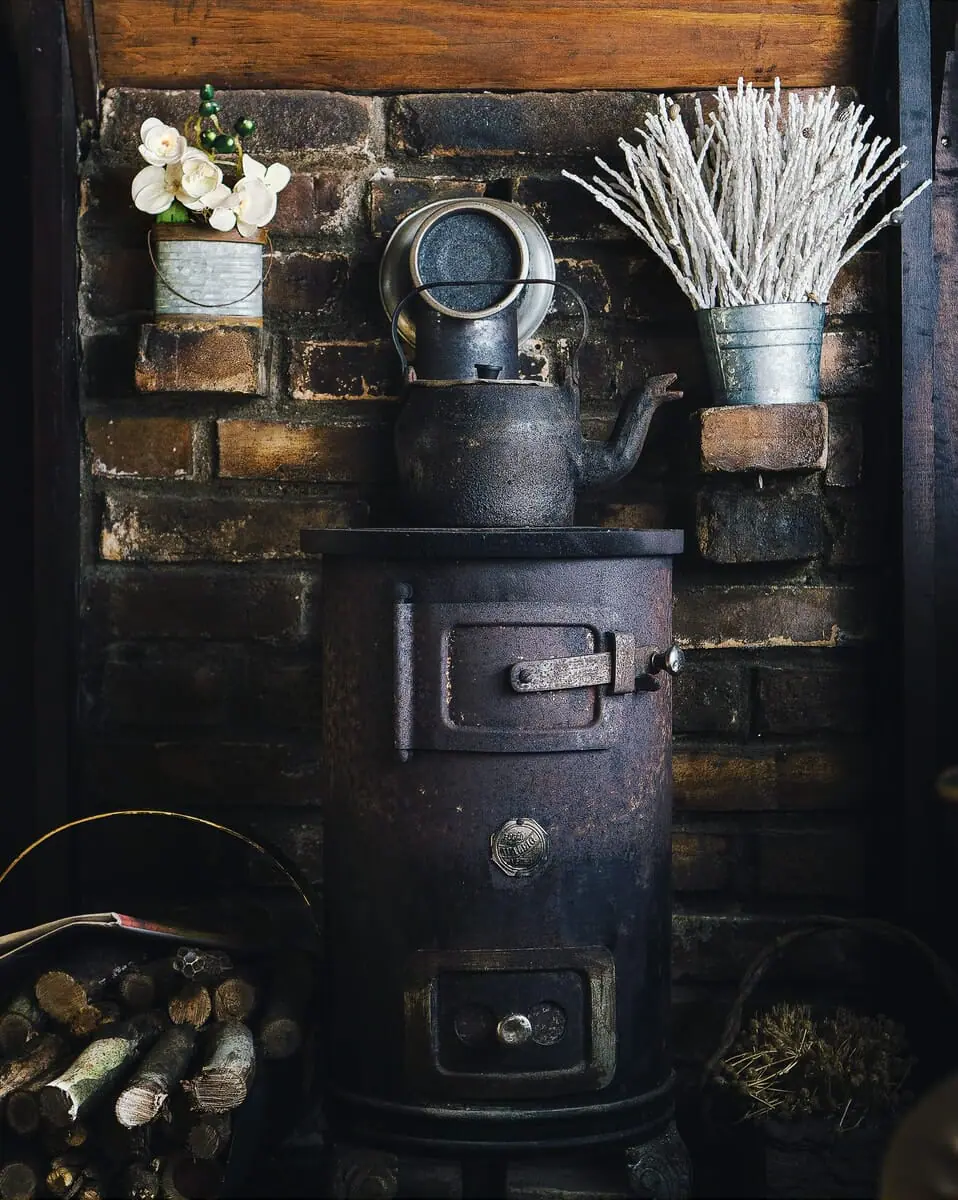
Original flue pipes on an old stove typically show a consistent dark patina rather than exposed bare metal or fresh rust — a heavily oxidized or mismatched pipe section is a sign of later repair or replacement.
7. Grate style
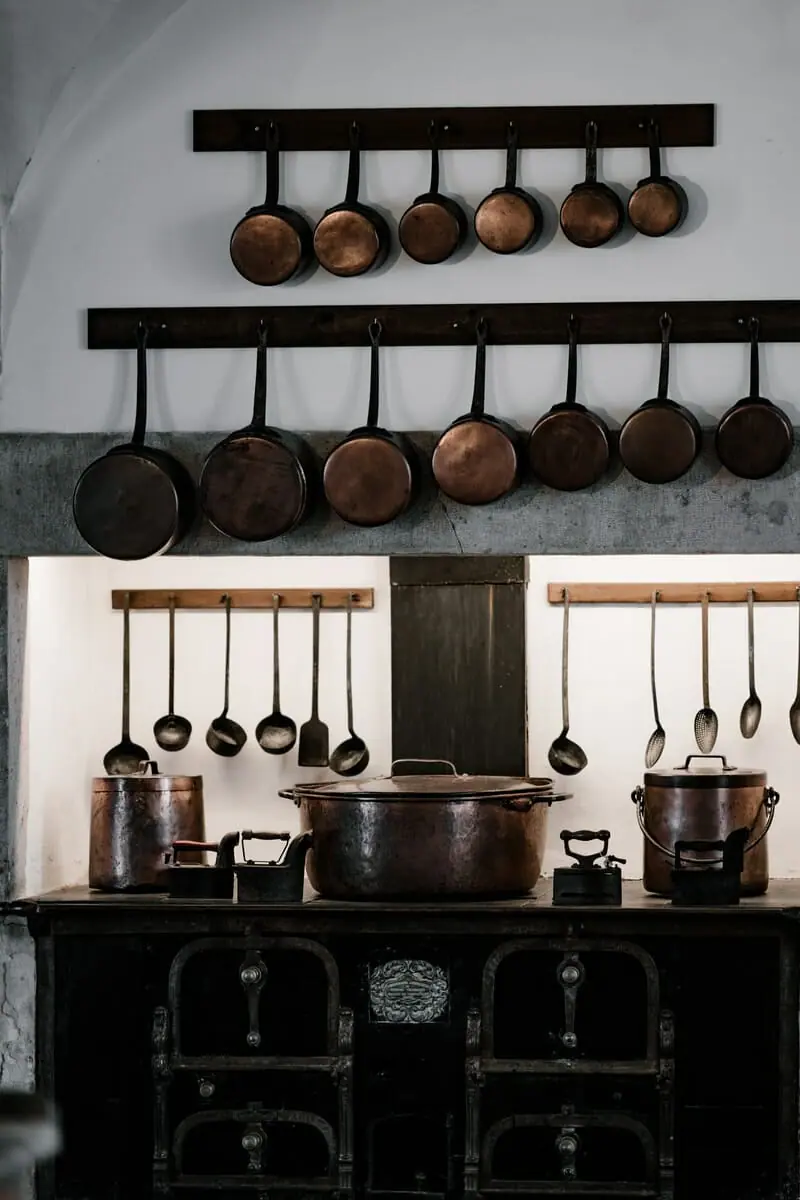
Older stoves commonly used simpler cast iron grate designs than what’s typical on modern stoves — grate style alone isn’t conclusive, but it’s one more data point alongside the others here.
8. Paint and finish
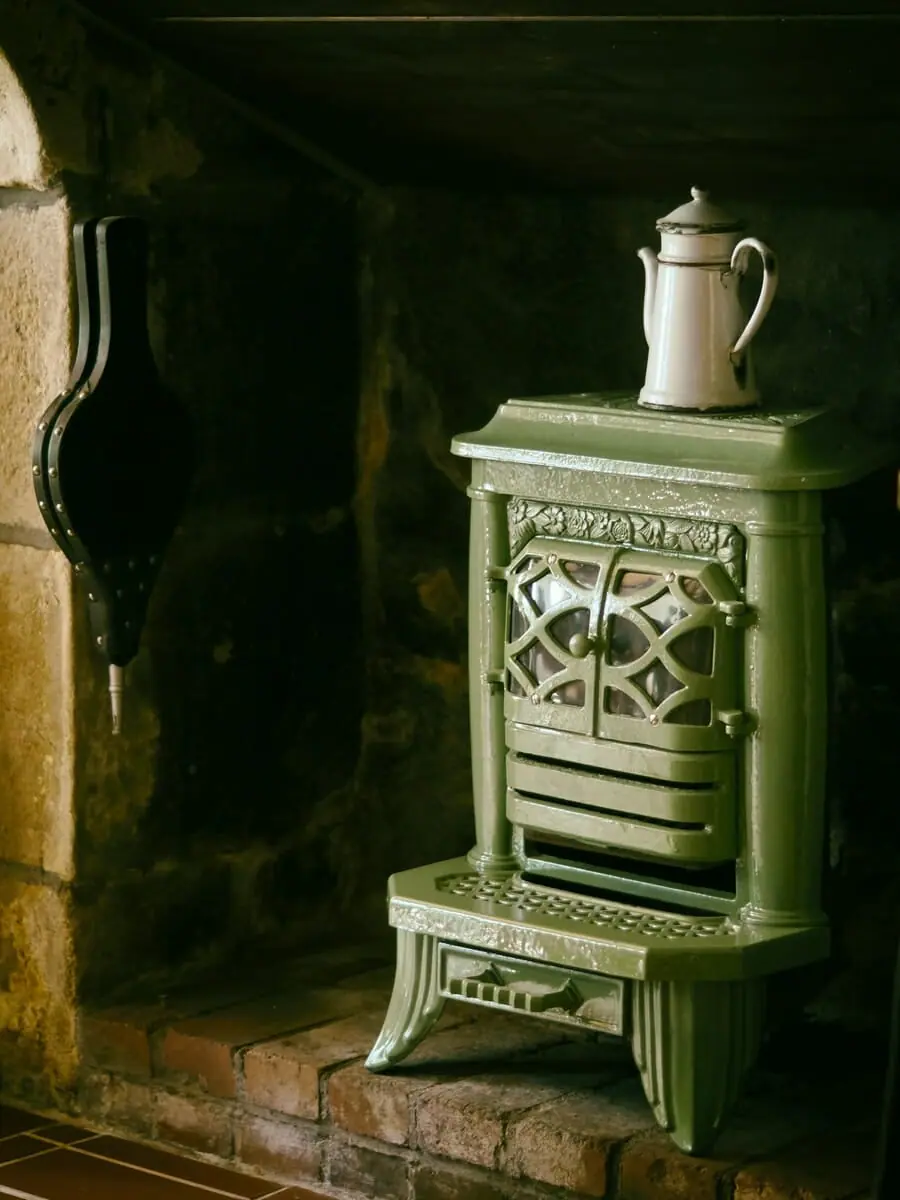
Traditional stove finishes ran black or dark brown, often a heat-resistant stove polish rather than paint — where it’s worn away, you’ll see bare cast iron underneath rather than a primer or undercoat layer.
9. Mixed materials
Most modern stoves are all-metal. Antique kitchen and parlor stoves frequently mixed metal with wood components (handles, trim, sometimes structural elements), which is worth checking if you’re trying to distinguish an original from a later reproduction.
10. Leg design
Antique stove legs tend to be cast as a single sculpted piece rather than bolted on separately — visible bolts or screws at the leg joints usually point to a newer or reproduction piece.
The Bottom Line
Confirming a stove is genuinely antique is usually the easy part — cast iron construction, older hardware styles, and a worn, consistent patina across the whole piece tell you a lot at a glance. Identifying exactly which manufacturer made it, and what it might actually be worth, takes more digging: a name or patent number embossed on the stove is your best lead, and the USPTO’s patent search is a legitimate way to track that down if you find a number.

Hi, my name’s Eugene Duke and I love sitting by my fireplace reading a book and sipping on an adult beverage. Do you have a fireplace in your house? I’ll help you figure out the best type and style of fireplace for your home.